Category Archives: blacks

Census 2020: Will Black Lives Count?

The year 2020 will go down in history books, and future generations will be reading about the year the earth stood still.  While our lives have definitely slowed down due to COVID-19, the harsh reality is this is a critical year.  In addition to a historic election cycle, this is also the year we complete the Census to determine how we will deploy our Democracy for the next decade. 

The US Constitution requires a population count every 10 years; it is called the Census.  The purpose of the Census is to help ensure our government represents the people.  Many of you may debate me on this, but this is the objective.  Census data is used to allocate seats and draw District lines for the US House of Representatives, State Legislatures, and local boards.  If you’ve ever complained about the resources in your community, it’s important to understand the significance of the Census.  In fact, federal funds are distributed each year based on this data.  From infrastructure (highways), medical assistance, school lunch programs, Head Start, and much more, the Census drives how those funds are allocated across the country.

I know there are many distractions, and some are essential and worthwhile, but we have a call to action.  We must ensure that our families are appropriately represented in Census data.  Historically, blacks have been undercounted.  According to a White Paper published by the Center on Poverty and Inequality at Georgetown Law, in the 2010 Census, blacks were undercounted by more than 800,000 with approximately 7% of black children being excluded; this is roughly twice the rate for non-Hispanic white children.

There are unfortunate realities that increase the risk of blacks being undercounted, but we must do our part by proactively completing the Census this year.  We must educate ourselves and exercise our voice.  So many have fought and gave up their lives for us to have a voice in this country, our country.  Let’s stay engaged during this pivotal time to ensure that positive change occurs for our communities. 

Due to the pandemic, key Census dates have been revised.  The self-response phase has been extended until October 31, 2020.  It’s now easier than ever to respond.  You can complete your Census information online, by phone, or by mailing in your self-response form.  Don’t overlook this simple act.  Your silence will have lasting impacts.  For more information on Census 2020, please visit 2020Census.gov or view the short video captured below.

We know that Black Lives Matter!  One way to ensure that others know this too is by exercising our right to be counted.
Juneteenth and Black Wall Street Massacre: Two Separate Historical Events

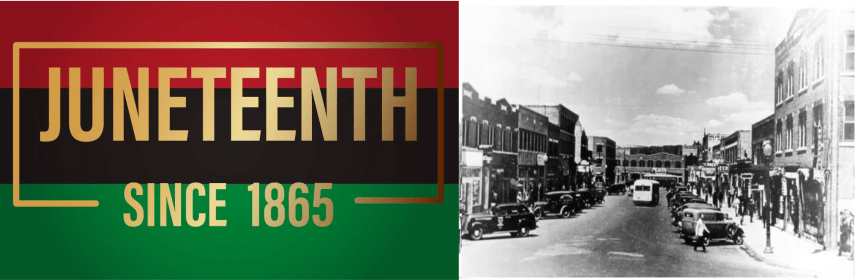
Over the last week, there has been a lot of media attention around Juneteenth and Tulsa, OK, the home of Black Wall Street.  While both are two monumental events in history, they are not related.  As a native Texan, I’ve always known the significance of Juneteenth, but will admit that I did not learn about Black Wall Street until I was an adult.

Juneteenth, also known as Jubilee Day, signifies the emancipation of the remaining enslaved blacks in the Confederacy.  While we all learned about the Emancipation Proclamation during our primary years of education, many may not know that slaves in Texas were not notified of their freedom until June 19, 1865, two and a half years after the issuance of the Emancipation Proclamation.  Because Texas was the most remote of the slave states and lacked the presence of Union troops, the proclamation was not enforced.  Of course, there was no incentive or desire for slave owners to share this information. 

Black communities have been consistently celebrating Juneteenth since the 1970s.  In a recent interview, Trump told the Wall Street Journal, “I did something good.  I made Juneteenth very famous.  It’s actually an important event, an important time.  But nobody had ever heard of it.”  Well, while you may not have heard of this historical date Mr. President, it doesn’t mean that others were not aware.  But, if your lack of knowledge helped to educate others, so be it.

The Black Wall Street massacre is another significant event in history but has no correlation to Juneteenth.  Black Wall Street was a predominately black neighborhood in Tulsa, OK.  At the time of the massacre, this area was known as the wealthiest black community in the United States.  On May 31, 1921, mobs of white residents attacked black residents and businesses ultimately killing men and burning and looting stores and homes.  This attack has been called “the single worst incident of racial violence in American history.” 

Trump’s initial decision to host a rally in Tulsa, OK on Juneteenth is what connected these two significant historical events.  One would think that someone in his camp should have been able to educate him on the significance of the date and location.  In the words of the late Steve Jobs, “It doesn’t make sense to hire smart people and tell them what to do; we hire smart people so they can tell us what to do.”

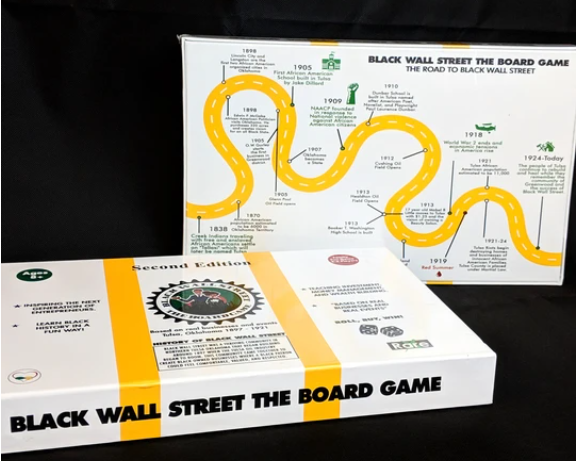
Resource: Black Wall Street The Board Game

undefined

To Rent or Buy

Homeownership has always been a key component of the American Dream, but as a result of the recession, many Americans are beginning to question if it’s worth it.  Since 2008, home values have declined at record levels.  In the African American community, home equity is one of the most significant contributors to an individual’s net worth.  Although many of us focus on what we make or our annual salary, the true measure of wealth is net worth.  Net worth is the difference in the value of your assets (what you own) and your liabilities (what you owe.)

While home values in most communities were impacted by the increase in the number of foreclosures, African American communities were affected at a greater level due to the number of sub-prime mortgages issued to African Americans.  The State of the Dream 2010:  Drained, published by United for a Fair Economy reported that over half of the mortgages issued to Blacks in recent years were sub-prime loans mostly to people who qualified for regular loans.

There are a host of calculators and charts that can be used to assess whether it’s better to rent or buy, but I believe the decision should be based on more than math.  If you are faced with making the decision to rent or buy, please consider the following:

  • Mortgage rates and home values are at historical lows.  This should not serve as a notice to buy more house than you can afford.  It simply means that individuals who couldn’t afford to purchase a home years ago may now be able to experience home ownership.  Additionally, we have to stop looking for the quick pay-off.  Many of us want equity in our homes right away, but I have a question for you – how much equity will you earn while renting?  A key takeaway from the recent housing crisis is to be weary of quick equity.  According to the Federal Reserve Bank of Cleveland, a reasonable estimate for home appreciation is approximately 2% annually.  As such, it is important to be realistic and patient
  • Credit worthiness is required for renting and buying.  If you are choosing to rent because you are afraid of being turned down by the bank when applying for a loan, you can also be turned down when applying to rent.  Another consideration is that more people are renting today, which means landlords have the ability to be selective when interviewing potential occupants for their property.  If you are concerned about your credit profile, take an opportunity to go to www.annualcreditreport.com and request your credit report from all three major credit bureaus.  You can also go to www.freecreditscore.com to receive your Experian credit score for free
  • Do your homework by researching different loan products.  You don’t have to become an expert on mortgages and the home buying process, but you should know the basics.  There are a number of credible sites that can provide a baseline of information for you.  Be realistic about what you can afford and ask questions.  Avoid creative loan products that may allow you to purchase more ‘house’ today, but can carry hidden costs or balloon payments that could very well mean trouble later

The choice to rent or buy may vary from person to person, but for the African American community, I believe the answer should be to ‘buy’.  There are a record number of foreclosures on the market right now and there are investors purchasing them for ‘pennies on the dollar.’  To achieve anything in life you have to be willing to take a risk.  The same holds true for investing.  Many of us only want to purchase something when others see the value in it, but true investors see the value before others.  This is how wealth is accumulated.  I know that renting may appear safe in today’s market, but if you want to accumulate wealth, you must take the risk and choose to buy instead.

« Older Entries