Tag Archives: millionaire

Self-Made Millionaires: Dr. Farrah Gray

As I continue the series on African American Self-Made Millionaires, this week’s Post features Dr.  Farrah Gray.  While there may be many that have not heard of Dr. Gray’s ‘rags to riches’ story, we can all learn from it.  So often we hear about people becoming successful and we say, “Great for them, but nothing like that can ever happen to me.”  If you’ve thought a similar thought or actually spoke it into existence, I urge you to rethink your position and consider the following question, “Why not me?”

During an interview on The Monique Show, Dr. Gray said, “Comfort is the enemy of achievement.”  In my recent Post, Self-Made Millionaires:  Madam C.J. Walker, I mention a similar statement made by Dr. Oz on The Oprah Winfrey Show.  I guess the reality is most people are prompted to change their situation when they can no longer envision staying in their current state.  Based on information found on Dr. Gray’s official website, this pivotal moment occurred for him at the tender age of six.  Due to his mother’s illness, he decided to figure out a way to help his mom, a single mother, pay the bills.  In an effort to help his mom, Dr. Gray collected rocks, painted them, and sold them as paper weights, book ends, and door stops.  While this was not a lucrative business, it taught him that with a bit of creativity and self-determination, he could write his own life story.  This confidence prompted him to begin carrying business cards at the age of seven that read, “21st Century CEO.”

In Dr. Gray’s book, Reallionaire, he mentions that in order to be succesful, we should answer the following questions:

  1. What comes easy to me, but harder to others?
  2. What am I willing to do and not get paid for it?
  3. How can I be of service and how can I give back?

I believe you’ve found your purpose when you can answer these three questions, and the only person that can stop you is yourself.  Another point that Dr. Gray makes in the aforementioned book is that it’s important to focus on ‘being rich from the inside out.’  We all want money and nice things, but what do you plan to do with it once you get it?  Dr. Gray lives by the following principle, “Money doesn’t change you, it magnifies who you are.”

While Dr. Gray has been successful in several business ventures, his most noteworthy achievements align with his desire to give back and help others that have backgrounds similar to his own.  After becoming a millionaire at the age of fourteen, he started New Early Entrepreneur Wonders Student Venture Fund (NE2W).  According to Dr. Gray’s bio, NE2W was a flagship organization on Wall Street that enlisted, educated, and engaged at-risk youth by creating and developing legal ways for them to acquire additional income.

In many ways, there are a lot of similarities in Dr. Gray’s and Madam Walker’s story.  Although they are generations apart, both were self-starters, believed in marketing themselves and their products, and had a desire to give back.  As I continue this series during the month of February, I believe that these character traits will be relevant to the other self-made millionaires as well.  As I prepare to close this week’s post, it would be remiss of me if I did not mention that Dr. Gray is not even 30 years old yet!  If you have young children – especially African American males, I would highly recommend that you make his books required family reading.  To learn more about Dr. Gray or order his books, please visit http://www.drfarrahgray.com.
Self-Made Millionaires: Madam C.J. Walker

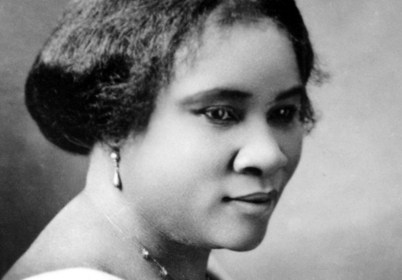
February is Black History Month, and while we should take an opportunity to celebrate our history all year long, I’ve decided to use this month to highlight the lives and habits of African American self-made millionaires.  I have chosen to start the series with Madam C.J. Walker.  We’ve all heard of her, and I’m willing to bet that most African American women grew up using some form of her hair products.  The intent of this Post is not to provide a history lesson on her life, but more so to examine the principles that she lived by which helped her succeed.

According to a brief biographical essay by A’Lelia Bundles, Madam Walker said, “I got my start by giving myself a start.”  I am very intrigued by this statement.  Many times we will wait for others to give us our big break instead of becoming our own champion.  Please understand that ‘no one is an island unto themselves;’ we all need help from time to time.  But, if you’re waiting on someone else to validate your self-worth or give you your great opportunity, you may be waiting for a long time.  So, included below are some of the characteristics of Madam Walker that may help us achieve success today:

She was a self-starter.  Her statement above validates this assumption.  She wasn’t a person that waited for others to see her worth.  She possessed enough confidence to take a chance on herself.  We all know someone with bright ideas and great potential, but that’s all they have.  The Bible states, “Faith without works is dead.”  Whether you’re a believer or not, the principle is universal; without action you will not succeed.  What dreams have you allowed to lie dormant in your life?  If you’re awaiting the perfect opportunity, it doesn’t exist.  We can all learn a lot from Madam Walker’s simple statement, “I got my start by giving myself a start.”

She was open to learning from others.  I have often said, “Don’t become the sharpest knife in your drawer.”  Successful people surround themselves with people who are smarter than they are.  It’s very comfortable to be around those who admire you or seek your advice, but one must ask the question, “Who’s stretching me and pushing me to be my best?”  If you can’t answer this question, you should begin to look for opportunities to expand your network and include people that will challenge you to become better.  And, if you have those people in your network but have chosen not to leverage the relationships and learn from those individuals, don’t complain about your life.  Exposure is a gift.  If you choose not to accept it, you are where you are by choice.

She solved a problem.  As a result of her own scalp condition, she developed a product that could be used by African American women at a time when there were not a lot of products on the market.  Most successful people solve problems for a living.  Do you have a solution to someone’s problem?  If so, that’s a significant ingredient in the recipe for success.

She became her own mouthpiece.  In today’s terms, she understood the importance of marketing her product.  I have often said that I hate sales; I don’t like to talk about my accomplishments.  I am working very hard to move away from this belief!  After all, who knows your product better than you?  Yes, it’s important that other people find value in what you’re doing, but they first must be aware that your product exists.  I will be honest, I have not mastered this principle, but it has become a primary focus for me in 2012.  In the biographical essay by A’Lelia Bundles, it states that Madam Walker travelled for a year and a half throughout the South selling her products door to door and performing demonstrations of her scalp treatments in churches and lodges.

As I performed my research for this Post, I realized she was not the first black woman entrepreneur in the hair care industry.  However, today when we think about pioneers in hair care for African Americans, she’s the first person that comes to mind.  In fact, she’s been given credit for inventions that she didn’t even create (i.e., the pressing comb and chemical relaxers.)  In the book, The 22 Immutable Laws of Marketing, the authors state it’s better to be first in the prospect’s mind than first in the marketplace.  Because she was willing to promote her product, she became a household name even though she wasn’t first.

As I prepare to close this Post, I’d like to challenge you to consider Madam Walker’s characteristics and evaluate your current state.  Several years ago, Oprah Winfrey had Dr. Oz as a guest on her show and he stated that the reason many Americans struggled with their weight and changing their lives was because the average American did not want to be uncomfortable.  Growth requires a level of discomfort.  In closing, I’ll leave you with a quote from T. Harv Eker, “If your goal is to be comfortable, chances are you’ll never get rich.  But if your goal is to be rich, chances are you’ll end up mighty comfortable.”