Tag Archives: Savings

Self-Made Millionaires: Ms. Mellody Hobson

Although Black History month is now over, I wanted to take an opportunity to complete my series on African-American Self-Made Millionaires.  For my regular readers, I apologize for my delay in completing the series, but I had a delivery date that I couldn’t miss.  On February 25, my husband and I welcomed a new baby boy into our family.  Things are going well and we are adjusting to having a baby in the house!

As I thought about how I’d like to close this series, I decided to highlight someone that has dedicated their life to helping others pursue their financial goals.  For this reason, this week I’ve chosen to feature Ms. Mellody Hobson.  Mellody Hobson is President of Ariel Investments, a Chicago investment firm which is also one of the largest African-American owned money management and mutual fund companies in the United States.  In addition to serving as Chairwoman of the Board of Trustees for Ariel Mutual Funds, she also serves on the Board of Directors for Starbucks Corporation, Dreamworks Animation, and The Estee Lauder Companies.  I am only ‘scratching the surface’ on Ms. Hobson’s accomplishments, but based on the information above, I’m sure you’ll agree that she has quite an impressive resume.

As I reviewed Ariel Investment’s website, along with other informative news articles about Ms. Hobson, I became intrigued by her story.  While her biography is impressive, I’ve decided to highlight some of Ms. Hobson’s financial advice.  An article on B. Couleur features advice that Ms. Hobson gave to parents during a 2008 interview.  Although the interview occurred several years ago, the advice is still relevant.  If you’re a parent, consider the following:

  • Give children stock instead of toys or money for Christmas.  This tip was also highlighted in our December post, Financial Gift Ideas for Teens
  • Start a ‘family 401K’ by matching every dollar your child saves with a dollar of your own
  • Divide allowances into short term expenses, long term expenses and money for charity.  This concept is similar to the Money Savvy Piggy Bank  highlighted in the post,  Financial Gift Ideas for Young Children

In addition to the advice given above, during a segment on Good Morning America, Ms. Hobson highlighted Three Things You Should Never Carry in Your WalletHer comments included the following:

  • Do not store receipts in your wallet.  She mentioned that receipts not only clutter your wallet, but they can also contain key information that identity thieves can use against you.  If you struggle in this area, consider carrying a smaller wallet; it will force you to only carry the essentials
  • Do not carry your social security card in your wallet.  I have to admit that I was guilty of not adhering to this piece of advice.  However, it makes a lot of sense.  An identity thief has ‘hit the jackpot’ if they are able to obtain this small piece of paper.  She also mentions that you should never carry a list of pins and passwords in your wallet
  • Do not carry expired credit cards or membership cards in your wallet.  She stresses that just because they’re expired doesn’t mean that thieves won’t try to use them.  Additionally, the cards may provide personal information that shouldn’t be in the hands of others

In addition to highlighting those items we should never carry in our wallet, Ms. Hobson mentions that the following items should be in our wallet:

  • You should carry a credit card, but just one.  Carrying additional credit cards may cause you to overextend yourself.  If you have more than one card, don’t close the accounts because this may have a negative impact on your credit rating, but practice restraint by carrying only one
  • Carry some cash for incidentals.  During this segment, Ms. Hobson mentioned studies have shown that people spend 12-18 percent more on purchases when they use credit cards vs. cash

Ms. Hobson has definitely succeeded in spite of the odds.  A recent study performed by Insight Center for Community Economic Development reported that the average African-American woman has a net worth of $5.  Given this statistic it is clear that we have a lot of work to do, but if we take an opportunity to learn from individuals like Ms. Hobson, we can achieve the financial success we desire.  Most people don’t become wealthy overnight; it takes patience and perseverance.  Ariel Investments was founded on this principle and it is still a part of the company’s ‘fabric’ today – hence the firm’s logo, “slow and steady wins the race.”   To learn more about Ms. Hobson or Ariel Investments, please visit http://www.arielinvestments.com.
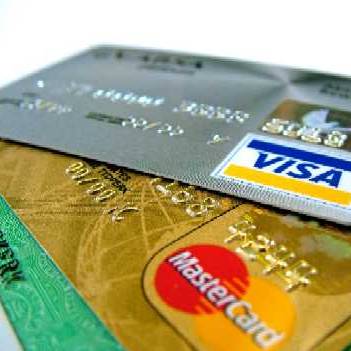

Stay Away From Prepaid Debit Cards

On Saturday, CNN’s Your Bottom Line, highlighted the growing number of prepaid debit cards.  There were financial experts on the show that spoke to the pros and cons of using them.  A couple of the most popular prepaid debit cards include The Rush Card by Russell Simmons and more recently, The Approved Card by Suze OrmanThe primary goal of the prepaid debit card is to provide an option other than cash to the unbanked consumer.  While this may sound great in theory, there are a host of reasons why prepaid debit cards are not the best option for someone who is trying to reestablish themselves.  It’s important to keep in mind the profile of an individual that a prepaid debit card is designed for.  The following are the common characteristics:

  • They are unbanked.  In past Posts, I have mentioned the study conducted by Insight Center for Community Economic Development, which concluded that people of color are almost five times less likely than Whites to have a bank account
  • They are Low-Income.  There are many hidden fees associated with prepaid debit cards such as transaction and administrative fees; they are often called hidden fees.  For individuals that are already working hard to ‘make ends meet’, they can’t afford to pay additional fees to use their own money
  • They are more likely to apply for Refund Anticipation Loans.  These loans also charge unnecessary fees for an individual to obtain money owed to them.  For more information on refund anticipation loans, please review my Post, Avoid Tax Refund Anticipation Loans
  • Individuals are more likely to use services like rent to own, title loans, and pawn shops.  I consider all of these services as part of the ‘underground credit world’ that is used by individuals that have bad credit or no credit.  If you have made a habit of utilizing these services, I urge you to begin taking steps to restore your credit.  Please consider my book, Rags to Riches, to guide you through this process

If you are looking for ways to begin reestablishing yourself, you should know that there are banks and credit unions that are willing to work with consumers.  If you’ve had trouble with managing a bank account or credit in the past, consider performing the following steps:

  1. Visit your local credit union and consider opening a savings account.  You can request a debit card with a Visa or Mastercard logo which serves the same purpose of a prepaid debit card.
  2. Visit AnnualCreditReport.com to obtain your free credit report from the three main credit bureaus.  You can’t fix something if you don’t know it exists.  You can request your credit report from the three main bureaus for free on an annual basis
  3. Commit to staying away from the ‘underground credit world’.  These services are not designed to help you.  For instance, if you utilize rent to own services, you will pay at least twice as much for your purchases.

If you commit to the three steps above, you will find that you’ll begin to make better financial decisions.  As with anything, change takes time, but there’s no time like the present to take the first step.  Believe in yourself and move forward.

Planning for Tax Refunds

Last week’s post was about avoiding tax refund anticipation loans.  Typically, the individuals that would apply for this service are those that expect a sgnificant refund.  In addition to a federal refund, if you pay state income taxes, you will likely receive a refund from the state as well.

Each year, many of us have an opportunity to receive lump sum payments for tax refunds, bonuses, or other types of settlements, but we often don’t have an objective or mission for the funds received.  To be truthful, most of us can’t even account for how the funds were spent.  If you are anticipating a lump sum payment of any kind this year, consider the following:

Pay Yourself First – Commit to saving 10% of the total lump sum amount.  According to a study performed by Insight Center for Economic Development, people of color are five times less likely to have a bank account than whites. If you are not a disciplined saver, I recommend restricting access to this money by depositing the funds into a Certificate of Deposit (CD).  A CD is a type of account that yields a higher interest rate than most savings accounts, and requires that your initial deposit is invested for a fixed period of time.  Please note that most banks will charge an early withdrawal fee if the CD is redeemed before its maturity date.  We all have to start somewhere; this deposit could very well be the beginning of your ‘rainy day’ fund.

Pay Off Debt – Paying off consumer debt can be an overwhelming process, and there are several valid ways to approach it.  In my opinion, the “snowball effect” is one of the most motivating ways to achieve your goal.  This method requires you to pay off the smallest balance first.  Once the debt is paid in full, you then apply the payment that you were making for that account to the next balance.  Although you may pay more in interest, the sense of accomplishment will help keep you committed to your goal.

Complete a Home Improvement Project –   Consider completing a home improvement project that will add value to your home.  If you are in a depressed market, be realistic about how long it will take to recover your investment.  Ultimately, kitchen and bathroom upgrades often offer the best bang for your buck.  By the way, you don’t have to limit your projects to the interior of your home; exterior projects not only boost the value of your home, but they may also help in increasing the value of your neighborhood as well.

Prepay for Lessons or Camps for Your Children – Summer will be here before you know it, and we’re all familiar with the saying, “An idle mind is the devil’s workshop.”  What plans do you have for your children this summer?  If you haven’t started thinking about this, you are behind.  I can’t tell you how many times I’ve heard parents say that they can’t afford to pay for summer camp or other enrichment activities for their kids.  I will admit that this line of thinking frustrates me because these comments often come from parents who have received lump sum refunds or spent money on the latest video game during the Christmas holiday.  If you child is spending their summer at home without any enrichment activities, you should really examine your parenting skills.  I urge you to take a portion of your funds and make an investment in your children.  If you start now, you may qualify for scholarships or reduced rates.  Ultimately you won’t know if you don’t try.  Most programs have filled up by March or April.  Don’t wait; begin your research today.

I hope this Post has been helpful.  Keep in mind, if you always do what you’ve always done, you will get the same results.  Living a reactive life requires no effort on our part, but it takes focus and discipline to be proactive.  The options listed above can assist you in starting a journey toward a life lived on purpose.

« Older Entries