Tag Archives: T. Harv Eker

Self-Made Millionaires: Madam C.J. Walker
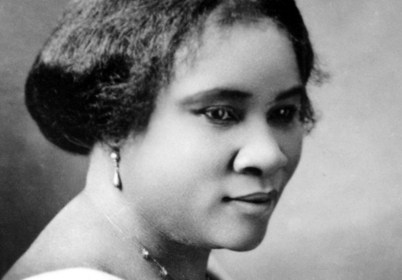
February is Black History Month, and while we should take an opportunity to celebrate our history all year long, I’ve decided to use this month to highlight the lives and habits of African American self-made millionaires.  I have chosen to start the series with Madam C.J. Walker.  We’ve all heard of her, and I’m willing to bet that most African American women grew up using some form of her hair products.  The intent of this Post is not to provide a history lesson on her life, but more so to examine the principles that she lived by which helped her succeed.

According to a brief biographical essay by A’Lelia Bundles, Madam Walker said, “I got my start by giving myself a start.”  I am very intrigued by this statement.  Many times we will wait for others to give us our big break instead of becoming our own champion.  Please understand that ‘no one is an island unto themselves;’ we all need help from time to time.  But, if you’re waiting on someone else to validate your self-worth or give you your great opportunity, you may be waiting for a long time.  So, included below are some of the characteristics of Madam Walker that may help us achieve success today:

She was a self-starter.  Her statement above validates this assumption.  She wasn’t a person that waited for others to see her worth.  She possessed enough confidence to take a chance on herself.  We all know someone with bright ideas and great potential, but that’s all they have.  The Bible states, “Faith without works is dead.”  Whether you’re a believer or not, the principle is universal; without action you will not succeed.  What dreams have you allowed to lie dormant in your life?  If you’re awaiting the perfect opportunity, it doesn’t exist.  We can all learn a lot from Madam Walker’s simple statement, “I got my start by giving myself a start.”

She was open to learning from others.  I have often said, “Don’t become the sharpest knife in your drawer.”  Successful people surround themselves with people who are smarter than they are.  It’s very comfortable to be around those who admire you or seek your advice, but one must ask the question, “Who’s stretching me and pushing me to be my best?”  If you can’t answer this question, you should begin to look for opportunities to expand your network and include people that will challenge you to become better.  And, if you have those people in your network but have chosen not to leverage the relationships and learn from those individuals, don’t complain about your life.  Exposure is a gift.  If you choose not to accept it, you are where you are by choice.

She solved a problem.  As a result of her own scalp condition, she developed a product that could be used by African American women at a time when there were not a lot of products on the market.  Most successful people solve problems for a living.  Do you have a solution to someone’s problem?  If so, that’s a significant ingredient in the recipe for success.

She became her own mouthpiece.  In today’s terms, she understood the importance of marketing her product.  I have often said that I hate sales; I don’t like to talk about my accomplishments.  I am working very hard to move away from this belief!  After all, who knows your product better than you?  Yes, it’s important that other people find value in what you’re doing, but they first must be aware that your product exists.  I will be honest, I have not mastered this principle, but it has become a primary focus for me in 2012.  In the biographical essay by A’Lelia Bundles, it states that Madam Walker travelled for a year and a half throughout the South selling her products door to door and performing demonstrations of her scalp treatments in churches and lodges.

As I performed my research for this Post, I realized she was not the first black woman entrepreneur in the hair care industry.  However, today when we think about pioneers in hair care for African Americans, she’s the first person that comes to mind.  In fact, she’s been given credit for inventions that she didn’t even create (i.e., the pressing comb and chemical relaxers.)  In the book, The 22 Immutable Laws of Marketing, the authors state it’s better to be first in the prospect’s mind than first in the marketplace.  Because she was willing to promote her product, she became a household name even though she wasn’t first.

As I prepare to close this Post, I’d like to challenge you to consider Madam Walker’s characteristics and evaluate your current state.  Several years ago, Oprah Winfrey had Dr. Oz as a guest on her show and he stated that the reason many Americans struggled with their weight and changing their lives was because the average American did not want to be uncomfortable.  Growth requires a level of discomfort.  In closing, I’ll leave you with a quote from T. Harv Eker, “If your goal is to be comfortable, chances are you’ll never get rich.  But if your goal is to be rich, chances are you’ll end up mighty comfortable.”

Dream It, Achieve It!

I’m sure that by now you’ve heard of the passing of Steve Jobs, Co-founder and CEO of Apple, Inc.  If you haven’t become familiar with his story, I urge you to “Google” him to learn more about his life’s journey.  Recently, a close friend mentioned the commencement speech he gave at Stanford University in 2005.  In his speech, he outlines things that he attributed to his success.  When you get an opportunity, listen to his speech; it’s time well spent.

You might be wondering what Steve Jobs has to do with bridging the wealth gap in the African American community.  While he was an extremely wealthy man, my intent is not to discuss the wealth he accumulated through his business ventures, but more so to discuss his will to achieve against the odds.  Unless you’re familiar with his story, most people would not assume that a first year college drop-out would be as accomplished as he was.

Often times, we have dreams or ideas that we’d like to pursue, but somehow life gets in the way.  Many of us may not have the liberty to pursue our entrepreneurial dream without working a full time job as well.  So how can you keep your “mojo” while navigating life’s twists and turns?  Please note that I am not professing to have all the answers, but I will offer up some lessons that I’ve learned from others that have achieved success in this area.  These are also the characteristics that I am embracing along my own journey.  The following are three key traits that will place you on the path to success:

1.       Be clear on what you want; get laser focused – There will always be competing priorities.  In the spirit of transparency, this is an area I’ve struggled in the most.  As soon as you think you’re set on a path, life will throw you a curve ball that can divert your focus.  People who are successful in pursuing their dreams are somewhat dogmatic when it comes to being laser focused in spite of life’s interruptions.  T. Harv Eker, author of Secrets of the Millionaire Mind, says it best, “The number one reason most people don’t get what they want is that they don’t know what they want.”

2.     Don’t underestimate life’s lessons – Your life will speak to you if you choose to listen.  We are often quick to observe and value someone else’s life lessons, but choose to devalue or minimize our own.  Steve Jobs referred to this as “connecting the dots.”  Take a moment and spend some time recalling your own journey – the successes and failures.  I guarantee you that in the midst of your track down memory lane, a common thread will exist and link you back to your purpose or that dream that once was a flame but may now resemble a flicker of light.  Make no mistake, there’s a lot that we can learn from observing others, but don’t stop there.  Your own life will speak the loudest if you listen.

3.     Simplify your life – Many times we stay stuck in the “rat race” because we are so busy trying to ‘keep up with the Joneses.’  If you really want to pursue your dream, you will be forced to make tough choices.  You may have to wait on the material possessions that you see others acquiring.  Don’t compare yourself to others.  A key to wealth accumulation is maintaining a high credit score, minimizing debt, and investing in assets.  It takes money to pursue most business endeavors, and in the beginning, you may have to invest in yourself before others will invest in your venture.  If you are overextended, you may not be able to see your vision come to fruition.  

Success is often accomplished by travelling the road less travelled.  It requires a confidence in self and a willingness to take risks.  Many of us work very hard in our chosen careers, but can become lukewarm when it comes to pursuing our own personal endeavors.  I have decided that I will no longer stand on the sidelines of life and admire others and their success; I will give my all to my own.  Won’t you join me?

Aim to Win in This Economy: What’s Your Passion? (Part 3)

As I prepare to close the Aim to Win in This Economy series, the last topic I would like to discuss is pursuing your passion.  Each one of us has been blessed with unique gifts and talents.  Many times, the things that we’re most passionate about align with the things that we do well.  Take a moment and think about the co-worker, relative, or friend that is an extraordinary artist.  Or, maybe you know someone great at event planning or helping others organize and de-clutter their lives.  What about you?  What can you do well?

According to an article in BusinessWeek, as a result of the recession, “necessity entrepreneurship” has increased significantly.  Necessity entrepreneurship occurs when people start businesses because they can’t find other employment.  In recent surveys conducted by Global Entrepreneurship Monitor, a research project that tracks entrepreneurship, necessity was a factor for 24.7% of new U.S. businesses in 2009, up from 16.3% in 2007.  Many times, business ideas are deferred for the safe bet, but when you are unemployed or underemployed, the risk factor carries less weight. 

Entrepreneurship is woven into the fabric of what makes our Country great.  However, to be successful, it takes more than talent.  In order for a small business to become a great business, the business owner has to work on the business, as well as in the business.  Perhaps you’re a wonderful baker, or a great decorator; it does not mean that you have the know-how to start a business and manage it effectively.  Please understand that I am not trying to “rain on your parade”, but I want to stress that your passion may steer you to the business of your dreams, but it will not keep you there.  Ultimately, if you are not willing to do the work, don’t waste your time and money.  However, if you understand that owning a business is much more than the skill or talent you possess, take the leap of faith and “bet” on you.  The following are key considerations when starting a business: 

  • Ownership Structure – Will you operate as a Sole Proprietor, Partnership, or Corporation?  Spend some time researching your options and choose the best structure for you.  The Internet has a number of resources to help you navigate through this process, however, if you’re unsure of where to start, consider www.legalzoom.com.
  • Applicable Federal and State Laws – Once you’ve identified your ownership structure, it is imperative that you gain a thorough understanding of federal and state laws that apply to your business.
  • Develop a Team – Although you may be able to produce the product for your business, an effective business requires a multitude of skill sets that you may not possess.  For instance, every business has to incorporate marketing in order to compete, and let’s not forget about bookkeeping and taxes.  If you do not possess these skills, you will have to hire help.  The skills that I mentioned in the example are necessities.  While I understand the need to save money where possible, foregoing the basics will land you out of business or in jail.
  • Protect Your Business – Explore insurance options for yourself and your business.  Insurance is something that we hope we never have to use, but are ever so grateful that we have it should the need arise.  
  • Capital – It takes money to start a business.  While it doesn’t hurt to be cost conscious, you have to be realistic about what resources you have available. It is also wise to consider establishing a reserve for the unexpected.
  • Find a Mentor – My favorite phrase is:  You don’t know what you don’t know, and you can’t do what you don’t know.  It is very important to find a mentor that has been where you’re trying to go.  There is no shame in asking for help. 

In addition to the considerations above, begin to seek resources that can help you fill in your knowledge gaps.  T. Harv Eker, author of Secrets of the Millionaire Mind, says it best:  “Every master was once a disaster, you can learn to be great at anything.”  Successful people are teachable.  Invest in yourself and seek opportunities to learn as much as you can about business.  Although I mentioned that it is important to develop a team, you should still be equipped with the basics.  For example, an accountant may prepare your financial statements, but you should have a thorough understanding of what’s being presented.  Included below are links to a couple of resources that I’ve found extremely helpful:

  1.  The E-Myth:  Why Most Small Businesses Don’t Work and What to Do About It, by Michael Gerber
  2. www.startupnation.com

I hope that you’ve enjoyed the Aim to Win in This Economy series.  I’d like to hear from you!  If you have recommendations on additional resources that can be helpful to those of us that are striving to pursue our passion, please share.  Remember, every great business was once a small business!